

 Image 1 of 3
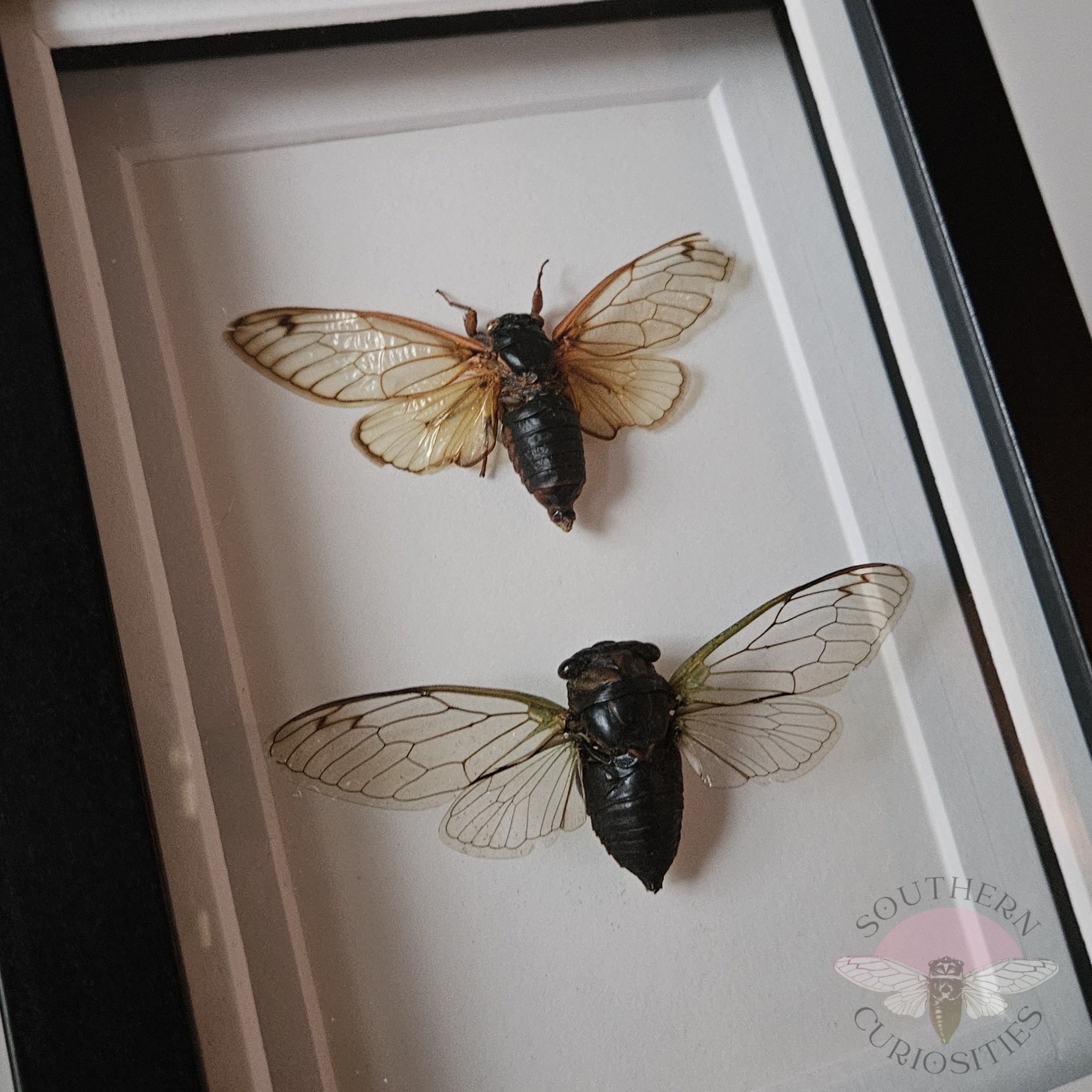 Image 2 of 3
 Image 3 of 3
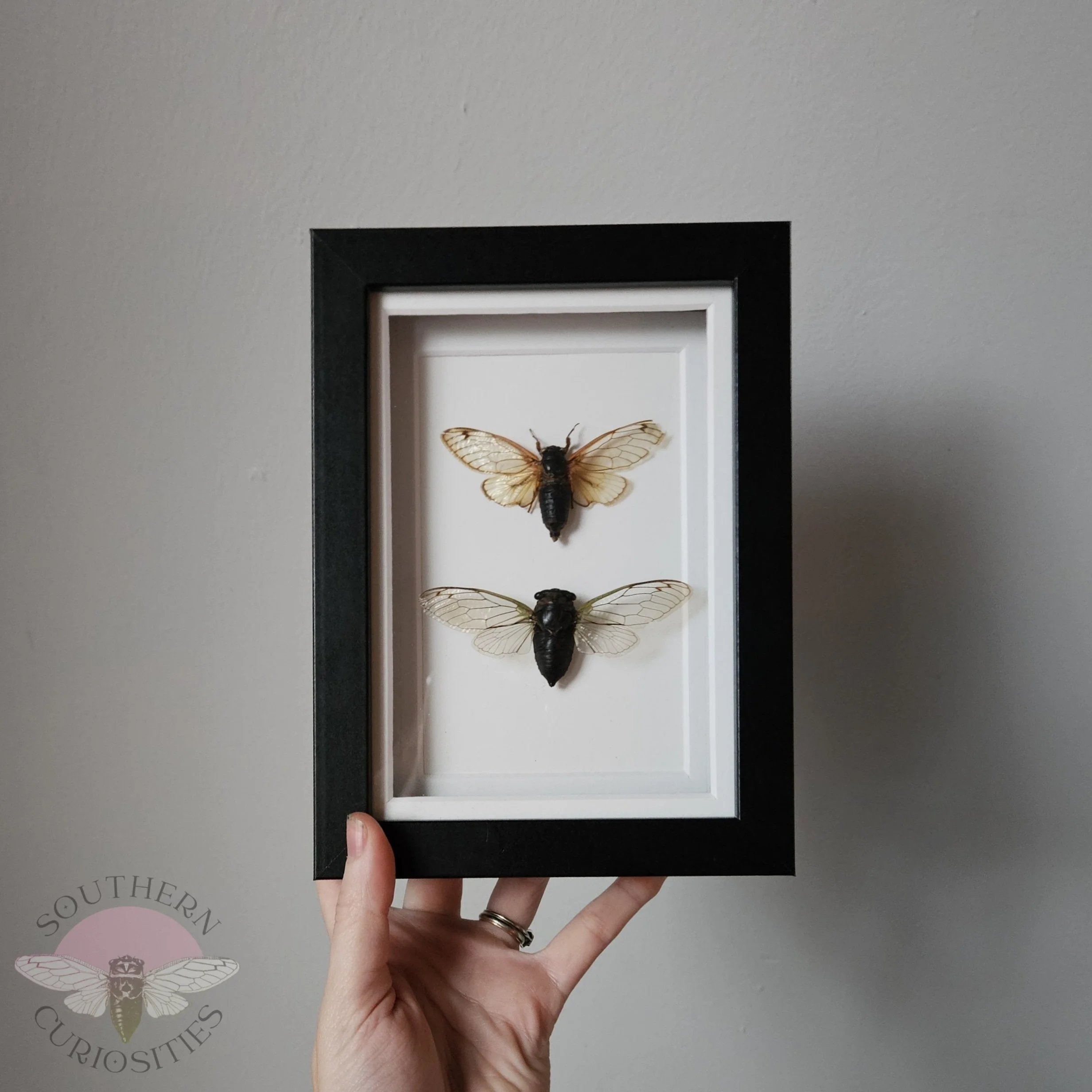
This 5x7 black shadow box features one annual cicada and one periodical cicada, both collected in 2024 in South Carolina. The periodical cicada comes from the Great Southern Brood (Brood XIX), while the annual cicada was locally sourced during the same season. They are mounted on a crisp white background with a white mat. The frame includes a hanging hook on the back for easy display.
Fun facts:
Annual cicadas are generally larger and darker, and they appear every year.
Periodical cicadas emerge in synchronized broods every 13 or 17 years and are famous for their bright red eyes and loud, buzzing chorus. Their wings have more of a gold hue and their bodies are smaller than the annual cicadas.
A unique piece that captures the fascinating life cycles of these remarkable insects.
Disclaimer : This specimen was sustainably sourced and passed naturally. Each specimen may not be in perfect condition due to the life it lived.
Care Instructions : Please be mindful that nature art is organic and fragile. Specimen should be kept out of direct sunlight or any room that may have increased humidity and be sure to handle with care.
This 5x7 black shadow box features one annual cicada and one periodical cicada, both collected in 2024 in South Carolina. The periodical cicada comes from the Great Southern Brood (Brood XIX), while the annual cicada was locally sourced during the same season. They are mounted on a crisp white background with a white mat. The frame includes a hanging hook on the back for easy display.
Fun facts:
Annual cicadas are generally larger and darker, and they appear every year.
Periodical cicadas emerge in synchronized broods every 13 or 17 years and are famous for their bright red eyes and loud, buzzing chorus. Their wings have more of a gold hue and their bodies are smaller than the annual cicadas.
A unique piece that captures the fascinating life cycles of these remarkable insects.
Disclaimer : This specimen was sustainably sourced and passed naturally. Each specimen may not be in perfect condition due to the life it lived.
Care Instructions : Please be mindful that nature art is organic and fragile. Specimen should be kept out of direct sunlight or any room that may have increased humidity and be sure to handle with care.